Introduction:The Forgotten Language
Imagine standing in a Victorian ballroom. The chandeliers glow, the music swells, and the ladies hold fans with delicate gestures, while bouquets pass quietly from hand to hand. A slight lift, a sweep across the cheek, a particular way of holding a handkerchief—all these small movements carry hidden meanings. In a society where etiquette forbade open displays of affection or emotion, these silent signals spoke volumes, offering a fascinating glimpse into silent communication history.
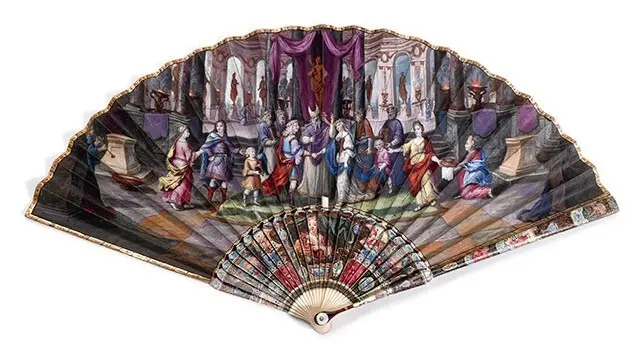
This is the world of the forgotten language of fans, flowers, and handkerchiefs—a sophisticated non-verbal communication system that allowed people to convey feelings, flirtations, and social cues without uttering a word. In this article, we’ll explore who used these secret languages, what they conveyed, and why this practice has almost vanished today, all while uncovering the cultural and emotional significance behind these forgotten codes.
Who Used Fans, Flowers, and Handkerchiefs to Communicate?
Victorian society was rigid. Men and women navigated strict social etiquette, especially in public or formal settings. In this environment, fans, flowers, and handkerchiefs became discreet tools for communication.
- Fans: Women’s fans were not just fashion accessories—they were silent instruments of messaging. The angle of the fan, the gestures made while holding it, or even the type of fan itself could signal interest, rejection, or playful flirtation.
- Flowers: Known as floriography, flowers carried symbolic meanings that people understood intuitively. For example, a red rose expressed love, while a yellow carnation could signal disappointment or disdain. Sending the right bouquet could convey complex emotions without a single word.
- Handkerchiefs: Though simpler, handkerchiefs were equally subtle. Dropping one could initiate a playful pursuit; holding it in a certain way could communicate readiness to dance or flirtation.

These practices were not limited to high society. Merchants, artists, and educated middle-class citizens often participated in these codes, making it a widespread, if highly refined, form of non-verbal dialogue.
Why Did People Use Objects Instead of Words?
At first glance, it might seem unnecessarily complicated to use fans or flowers instead of speaking openly. But the restrictions of social etiquette made direct communication risky or inappropriate.
- Open displays of romantic interest could result in scandal.
- Expressing anger or disappointment publicly was considered unladylike or socially unacceptable.
- Silent communication allowed for discretion, nuance, and creativity.
In essence, these objects created a language that transcended words, allowing people to navigate society’s boundaries with charm and subtlety.
The Language of Fans: Gestures and Meanings
Fans were not just tools—they were instruments of expression. Some commonly known gestures included:
- Closing the fan slowly: Indicates refusal or disinterest.
- Fanning rapidly: Expresses excitement or interest.
- Placing the fan to the lips: Signals a secret or hidden message.
- Dropping a fan deliberately: A playful invitation to engage.
Fans allowed women to communicate with suitors discreetly across crowded rooms, creating an entire vocabulary of gestures that was understood among those familiar with the rules.
The Language of Flowers: Floriography
Flowers became a sophisticated code with precise meanings. This language of flowers, or floriography, was widely popularized in Victorian England, with guides and dictionaries explaining each bloom’s significance.
- Red rose: Love and passion
- White lily: Purity or innocence
- Yellow carnation: Rejection or disdain
- Forget-me-not: Remembrance and fidelity
Even the arrangement, color, and number of flowers could modify the message. For instance, a single rose might signal simplicity, while a carefully arranged bouquet could convey subtle nuances understood by the recipient.
In my experience studying Victorian correspondence and etiquette guides, the sophistication of floriography shows that people didn’t just communicate—they crafted messages like artists.
Handkerchiefs: The Subtle Signals of Movement
Handkerchiefs were often overlooked, but they were equally effective in non-verbal communication. A handkerchief could:
- Signal readiness to dance
- Invite a conversation
- Act as a playful “drop” to catch attention
Unlike fans or flowers, handkerchiefs were portable, personal, and immediate. The simplicity of the object made its message more direct yet equally charming in context.
When Was This Non-Verbal Language Most Popular?
The height of this symbolic communication was the Victorian era (1837–1901). During this period, social norms emphasized propriety, restraint, and public decorum. Fans, flowers, and handkerchiefs became essential tools for navigating love, friendship, and social connections without transgressing etiquette.
By the late 19th century, the practice began to fade as:
- Social norms evolved
- Modern communication methods emerged
- Public spaces became more liberal in behavior and expression
By the 20th century, this language was largely forgotten, surviving only in historical references, novels, and preserved etiquette manuals.
Where Was This Secret Language Commonly Used?
Victorian society had clear public and private spheres. This language thrived:
- Balls and dance halls: Fans and handkerchiefs allowed women to signal interest across crowded rooms.
- Tea gatherings and parlors: Flower arrangements could be read as conversational cues.
- Public gardens: Placement of bouquets or gestures with handkerchiefs conveyed meaning in social strolls.
Even everyday settings, like carriage rides or promenades, could be stages for silent messages. Understanding these signals was a mark of social literacy.
Why Is This Language Mostly Forgotten Today?
Several factors contributed to the disappearance of these symbolic systems:
- Relaxation of strict social codes: Modern society allows more direct expression.
- Mass production and standardization of flowers and accessories: Reduced the subtlety and exclusivity of symbolic meaning.
- Loss of shared knowledge: Without etiquette manuals or social teaching, the codes were not passed down.
Yet traces remain in literature, films, and historical reenactments, waiting to be rediscovered.
Historical Examples: Fans, Flowers, and Handkerchiefs in Action
Museums and archives preserve tangible evidence:
- Fans: Victoria & Albert Museum holds collections showing painted gestures and hidden messages.
- Flowers: Illustrated Victorian “floriography” guides document meaning by bloom, color, and arrangement.
- Handkerchiefs: Letters and diaries show how they were used to signal interest, arrange meetings, or flirt subtly.
These examples highlight how deeply ingrained this silent language was in daily life.
The Emotional and Social Significance
This language was more than practical—it reflected human creativity under constraint. By limiting speech, society encouraged subtlety, observation, and emotional intelligence. The gestures, flower meanings, and handkerchief signals are not just quaint curiosities; they are an essential part of silent communication history, showing how people adapted objects and behaviors to convey complex emotions in socially acceptable ways.
In my observation, this parallels modern non-verbal communication in digital spaces. Emojis, subtle likes, and carefully timed messages serve as modern equivalents of Victorian symbolic systems: discrete, interpretable, and culturally coded. Understanding this history reminds us that even the smallest gestures can carry profound meaning.
Why Study the Forgotten Language Today?
Understanding this lost language helps us:
- Appreciate historical social norms and etiquette
- Decode literature and artworks that assume knowledge of these signals
- Recognize the complexity of human non-verbal communication across time
It also reminds us that even the smallest gestures—an angled fan, a bouquet, or a dropped handkerchief—can carry profound meaning.
Practical Lessons: Applying Silent Messaging Today
While fans and handkerchiefs are largely obsolete, the principles remain relevant:
- Awareness of non-verbal cues: Body language, eye contact, and gestures remain powerful.
- Context matters: Signals are interpreted through shared cultural understanding.
- Creativity in communication: Subtlety can enhance emotional intelligence and connection.
Much like Victorian society adapted objects for discreet messaging, we can adapt modern tools—texts, emojis, digital icons—to communicate nuanced meaning effectively.
Conclusion
The forgotten language of fans, flowers, and handkerchiefs is a testament to human ingenuity in silent communication history. In a world of strict social rules, people developed complex, silent systems to express desire, affection, and intention. Though largely forgotten, understanding this symbolic language offers insights into history, literature, culture, and even our modern methods of subtle communication.
The next time you see a fan, a bouquet, or even a handkerchief, remember—they are more than objects. They are messages waiting to be read, a living reminder of the rich legacy of silent communication history.
FAQs
FAQ 1: What is the language of fans, flowers, and handkerchiefs?
It’s a Victorian-era non-verbal communication system where gestures, flower meanings, and handkerchief movements conveyed emotions and intentions discreetly.
FAQ 2: Who used this language?
Primarily Victorian men and women navigating strict etiquette, including high society, merchants, and educated middle-class citizens.
FAQ 3: Why did this language disappear?
Relaxed social norms, mass production of flowers/accessories, and loss of shared etiquette knowledge made the system obsolete.
FAQ 4: Can we learn from this language today?
Yes—its principles of subtlety, observation, and emotional intelligence can be applied to modern non-verbal communication.
FAQ 5: Are there museums or guides to study this language?
Yes—collections like the Victoria & Albert Museum, the Library of Congress, and digitized etiquette manuals preserve historical examples, offering valuable insights into silent communication history and the forgotten language of fans, flowers, and handkerchiefs.