Introduction
Have you ever stood inside a house and felt that something didn’t quite add up? A doorway that leads nowhere, a sealed window still faintly visible, or a wall that seems oddly placed. These quiet details are more than quirks—they are clues. When you learn to read them, you begin to uncover house history through architecture, discovering how past occupants lived, adapted, and reshaped the space long before you arrived. These physical traces, often called architectural ghost signatures, turn ordinary homes into living records of time.
What Are Architectural Ghost Signatures, Really?
Let’s start at the foundation.
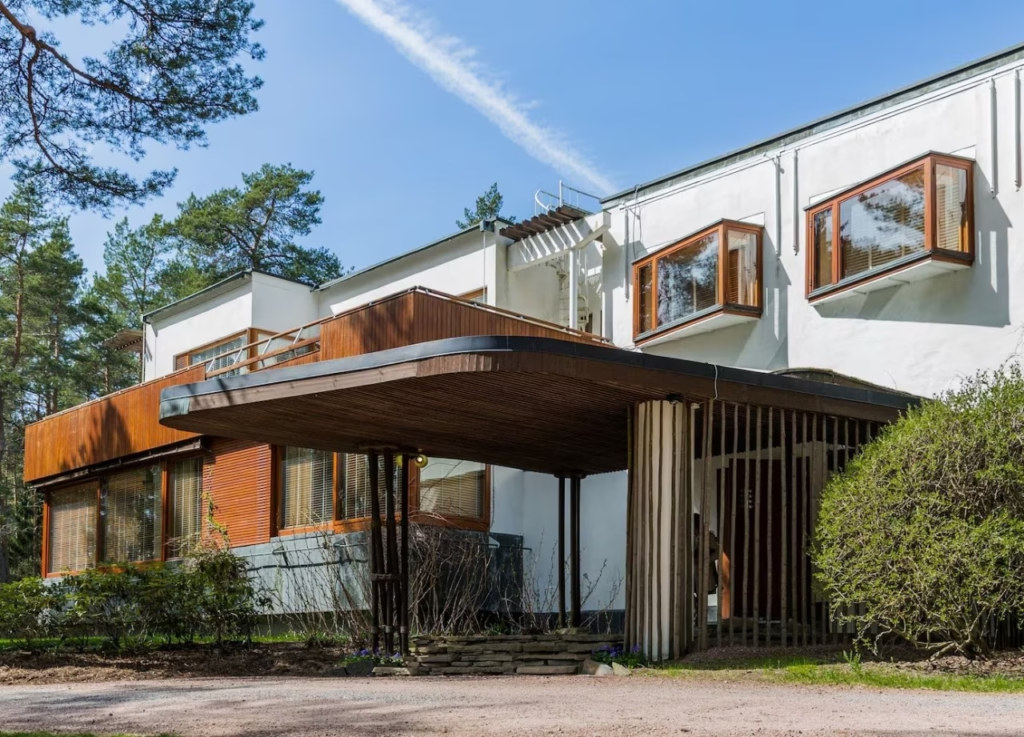
Architectural ghost signatures—sometimes called ghosting, structural remnants, or architectural outlines—are physical marks left behind when a building changes but never fully erases its past.
Think of them like architectural fingerprints.
They appear when:
- A window is bricked up but its outline remains
- A door is removed, leaving a shadow in the plaster
- A wall is shifted, but the floor pattern reveals the original layout
- Old signage fades but never fully disappears
Unlike ruins, ghost signatures exist in occupied, everyday homes. You might be cooking dinner beside one.
Why Buildings Remember Even When We Renovate

Here’s a question many people ask—sometimes without realizing it:
Why don’t renovations erase everything?
Because buildings are stubborn.
Materials age differently. Paint fades unevenly. Brick resists drywall. Old load-bearing walls leave clues long after they’re removed.
But there’s a deeper reason too.
Buildings aren’t redesigned all at once. They evolve in stages, responding to:
- New owners
- Changing family sizes
- Economic pressures
- Cultural shifts
- New technologies
Every change leaves a mark. And not all marks are meant to be seen—but they remain anyway.
Where Ghost Signatures Commonly Appear in Houses
If you’re curious where to look, start here.
Walls
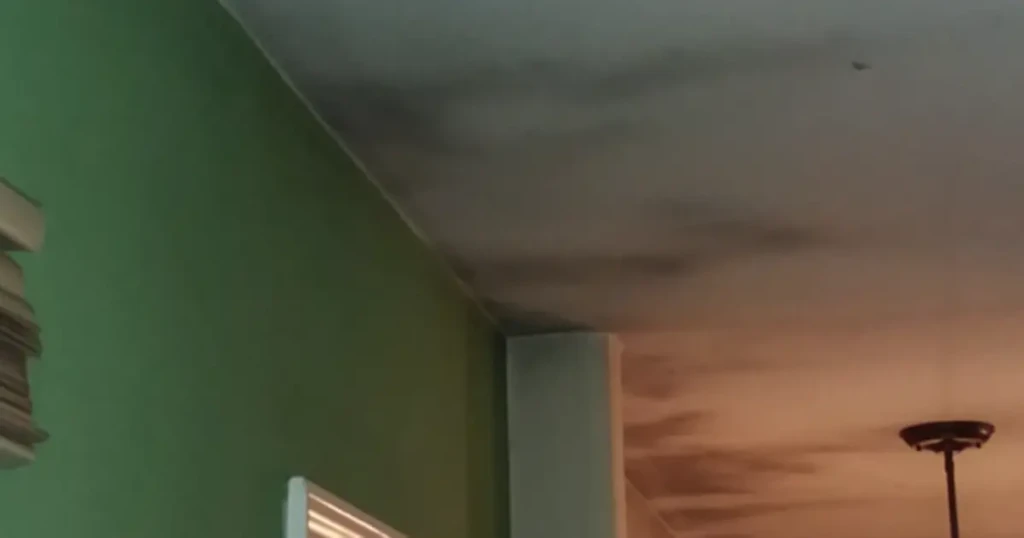
- Door and window outlines
- Color shifts from removed partitions
- Ghost lines where staircases once climbed
Floors
- Inconsistent tiles or wood patterns
- Patchwork repairs showing old room divisions
Ceilings
- Former ceiling heights
- Covered beams or ventilation routes
Exteriors
- Bricked-up windows
- Old balconies sealed off
- Faded house numbers or signage
By observing these details, you’re not just spotting irregularities—you’re decoding the past, tracing the everyday life of former occupants, and understanding the evolution of the home over time. In essence, you’re experiencing house history through architecture firsthand.
When Were Ghost Signatures Most Commonly Created?
Ghost signatures exist in buildings of all ages—but they’re especially common in houses built or modified during periods of rapid change.
These include:
- Industrial-era housing, when homes were quickly adapted for workers
- Post-war homes, expanded for growing families
- Colonial and early modern houses, retrofitted for new lifestyles
- Urban residential buildings, constantly reshaped by zoning laws
Whenever life changes faster than architecture can keep up, ghost signatures multiply.
Who Studies Architectural Ghost Signatures?
No single profession owns this concept.
Instead, ghost signatures sit at the intersection of:
- Architectural historians
- Conservation architects
- Urban anthropologists
- Building surveyors
- Curious homeowners
What’s fascinating is that you don’t need formal training to notice them. You just need to slow down and look differently.
What Ghost Signatures Reveal About Lifestyle and Culture
This is where things get interesting.
Ghost signatures don’t just show what changed—they show why.
A sealed doorway might suggest:
- A shift from communal to private living
- Gendered spaces disappearing
- Servant quarters being absorbed
A removed fireplace tells a story about:
- Energy transitions
- Social gathering habits
- Climate adaptation
In other words, architecture quietly records social history—even when textbooks don’t.
Architecture as Time Travel (Without the Romance)
There’s a popular idea floating around called time architecture—the notion that architecture captures the spirit of its era.
That’s true. But ghost signatures do something subtler.
They don’t speak of glory or intention.
They whisper about compromise.
They show:
- What people changed their minds about
- What they could no longer afford
- What they outgrew, abandoned, or redefined
If architecture is a sentence, ghost signatures are the crossed-out words.
My Personal Insight: Why Ghost Signatures Matter More Than Blueprints
Here’s my own perspective—one I’ve developed by closely studying ordinary residential spaces rather than famous buildings.
Blueprints tell you how a house was supposed to be used.
Ghost signatures tell you how it actually was used.
In many homes, the most honest history isn’t in archives—it’s in uneven plaster, mismatched tiles, and sealed openings.
That’s why ghost signatures matter. They capture lived reality, not idealized design.
Can Ghost Signatures Increase a Home’s Value?
Surprisingly—yes.
In historically sensitive markets, visible architectural traces can:
- Increase heritage value
- Attract buyers interested in authenticity
- Support restoration grants
However, context matters. In some markets, they’re seen as flaws. In others, they’re proof of character.
The key is interpretation.
Which Renovations Erase Ghost Signatures (and Which Don’t)?
Not all renovations are equal.
Most Likely to Erase Traces
- Full drywall replacement
- Floor leveling with new screed
- Complete facade recladding
Most Likely to Preserve Traces
- Adaptive reuse
- Partial restoration
- Minimal intervention upgrades
Ironically, the push for “perfect finishes” often destroys the very stories that make homes meaningful.
How Homeowners Can Identify Ghost Signatures
You don’t need tools—just curiosity.
Start by:
- Looking for asymmetry
- Noticing material changes
- Comparing floor plans to lived flow
- Asking why something feels awkward
The moment you stop asking “Is this ugly?” and start asking “What happened here?”—you’ve crossed the threshold.
Why Everyday Buildings Deserve Historical Attention
We often reserve architectural appreciation for landmarks.
But ghost signatures remind us that ordinary homes carry extraordinary histories.
They record migration.
Economic survival.
Family evolution.
Cultural negotiation.
Your house may never be in a museum—but it’s still an archive.
Conclusion: Reading the Past in Plain Sight
Architectural time travel doesn’t require imagination—it requires attention.
Ghost signatures aren’t paranormal. They’re profoundly human.
They exist because people change, adapt, and move forward—without ever fully erasing where they came from.
And once you learn to read them, your house stops being silent.
It starts talking back.
FAQs
FAQ 1: What exactly is architectural time travel?
Architectural time travel is the idea that buildings can reveal different periods of history within a single structure. By studying ghost signatures, you can uncover house history through architecture, seeing how spaces were used, modified, and adapted by previous occupants over time.
FAQ 2: Are ghost signatures the same as building defects?
No. Defects result from failure; ghost signatures result from change.
FAQ 3: Do modern houses have ghost signatures too?
Absolutely. Open-plan conversions, removed smart systems, and sealed extensions already leave traces.
FAQ 4: Should ghost signatures always be preserved?
Not always—but they should at least be understood before being erased.