Introduction
In 1800, sending a letter was nothing like dropping a stamped envelope into a mailbox. It was a complicated, expensive, and often unreliable process governed by distance, page count, social class, and sheer luck—a reality that sits at the heart of the history of postage stamps. Most surprisingly, the recipient—not the sender—paid for delivery.
This article is a deep dive into that strange, fascinating pre-stamp world. We’ll explore how letters were sent, who delivered them, why postage worked the way it did, and what this forgotten system can teach us about modern communication.
How Did People Send Letters in the 1800s?
To understand how people sent letters in the 1800s, you have to place yourself firmly within the history of postage stamps—or more accurately, the world before they existed. The short answer to this common question is simple but revealing: people sent letters carefully, creatively, and with no guarantees, because there was no standardized, prepaid system to rely on.
There were three main ways a letter could travel:
- Official postal services, run by governments or licensed contractors
- Private carriers or messengers, often travelers, merchants, or stagecoach drivers
- Personal networks, where letters were handed to friends or acquaintances heading in the right direction
Each option came with trade-offs. Government posts were more “official” but expensive and slow. Private delivery was faster but risky. Personal delivery depended entirely on trust.
Unlike today, there was no universal expectation that a letter would arrive.
The Pre-Stamp Postal System Explained
Before postage stamps existed, postal systems operated on a logic that now feels upside down.
What Was the Pre-Stamp Postal System?
The pre-stamp postal system was a pay-on-delivery model. Instead of prepaying postage, the sender wrote the letter and sent it unpaid. The recipient paid the fee upon collection.
Why? Because collecting money upfront was administratively difficult, and governments wanted to ensure they were paid only when delivery actually occurred.
From a bureaucratic point of view, it made sense.
From a human point of view? Not so much.
Why Did the Recipient Pay for Postage?
This is one of the most searched and most misunderstood aspects of early mail.
The Logic Behind Recipient-Paid Mail
Several factors drove this system:
- Verification: The post office could confirm delivery before collecting payment
- Trust issues: There was no standardized way to prepay securely
- Revenue protection: Governments avoided chasing unpaid senders
But this created strange social dynamics.
Recipients sometimes refused letters they couldn’t afford—or didn’t want to pay for. Others used coded markings on the envelope so the sender’s message could be read without opening the letter, avoiding the fee altogether.
Yes, people gamed the system.
How Were Postage Costs Calculated?
Here’s where things get truly complicated.
Distance and Page Count Ruled Everything
Postage wasn’t based on weight, as it is today. Instead, it depended on:
- Distance traveled (measured in miles between post towns)
- Number of sheets of paper (not pages—physical sheets)
A two-page letter written on two sheets could cost twice as much as a two-page letter written front and back on one sheet.
This is why people wrote in:
- Tiny handwriting
- Cross-hatched text (writing sideways over existing lines)
- Extremely concise language
Every extra sheet was expensive.
Where Were Letters Sent and Received?
There were no home mailboxes in 1800.
The Geography of Letter Exchange
Letters were typically:
- Written at home, inns, or workplaces
- Dropped off at post offices, coffeehouses, or inns
- Collected in person by the recipient
Post offices were often inside general stores or taverns. In rural areas, people might travel miles just to check if a letter had arrived.
Mail delivery to private homes was rare and usually reserved for elites.
Who Delivered Letters in the 1800s?
Another common question: Who actually carried the mail?
The People Behind the Post
Delivery was handled by:
- Government-employed post riders
- Stagecoach operators
- Ship captains (for overseas mail)
- Private couriers
These individuals faced harsh conditions—poor roads, bad weather, banditry, and political instability. Delays were normal. Loss was expected.
When we complain about delayed emails today, it’s worth remembering this.
How Were Letters Secured, Folded, and Sealed?
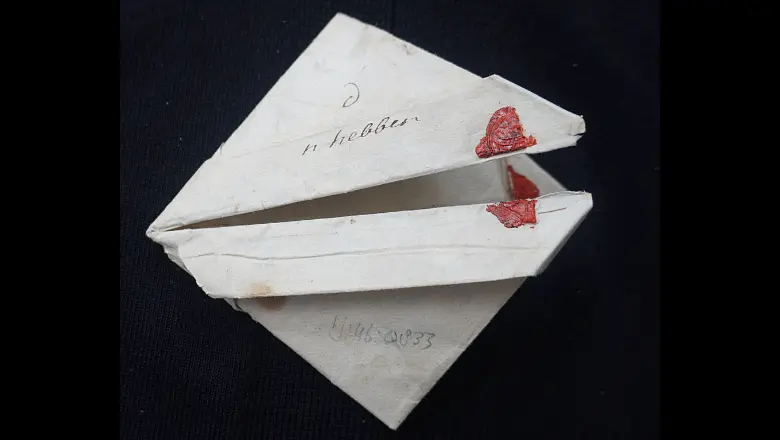
Envelopes weren’t common yet.
The Art of Letterlocking
Instead, letters were folded into their own protective casing using a technique now called letterlocking.
The process involved:
- Folding the paper multiple times
- Slitting or tucking corners
- Sealing with wax or thread
This served both privacy and tamper evidence. If the seal was broken, it was obvious.
Ironically, many of these letters have survived better than early stamped mail.
Which Social Classes Could Afford to Send Letters?
Let’s be honest: letter writing was a privilege.
Communication as a Class Marker
Regular correspondence was mostly limited to:
- Merchants
- Government officials
- Clergy
- Wealthy families
For working-class people, sending a letter could cost several days’ wages. As a result, letters were reserved for emergencies, business, or life-changing news.
Silence didn’t mean indifference. Often, it meant poverty.
When Did Standardized Postal Systems Begin?
By the early 19th century, cracks were forming in the old system.
The Pressure for Reform
Problems included:
- High costs discouraging communication
- Administrative complexity
- Widespread avoidance tactics
Reformers began asking a radical question: What if the sender paid upfront?
When and Why Were Postage Stamps Introduced?
The answer came in 1840.
The Birth of the Stamp
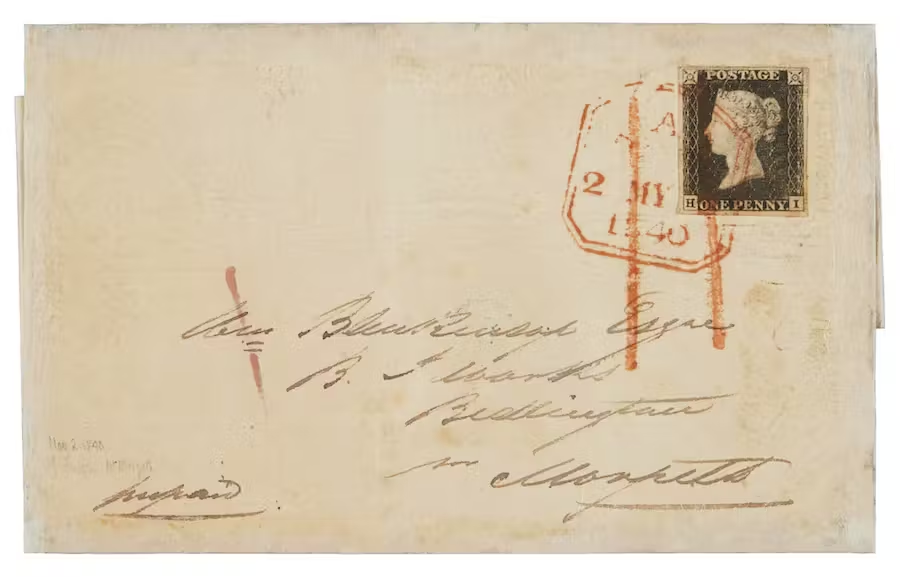
The world’s first adhesive postage stamp—the Penny Black—was issued in Britain.
It introduced:
- Prepaid postage
- Flat rates based on weight
- Universal access to mail
This single reform democratized communication.
Letters exploded in volume. Literacy increased. Personal relationships changed.
Why Did Governments Delay Introducing Stamps?
If stamps were so effective, why the delay?
Institutional Inertia
Governments feared:
- Revenue loss
- Fraud
- Administrative overhaul
Change was risky. But stagnation proved worse.
Sound familiar?
A Writer’s Insight: Why Pre-Stamp Mail Feels Strangely Modern
Here’s my contrarian take.
Studying pre-stamp mail feels less like ancient history and more like looking at today’s attention economy.
Back then:
- Communication was expensive
- Messages were deliberate
- Silence carried meaning
Today?
- Communication is cheap
- Messages are abundant
- Meaning is diluted
In 1800, you didn’t write unless it mattered.
Maybe that’s something worth relearning.
Can Studying Pre-Stamp Mail Help Us Understand Modern Communication?
Absolutely.
It reminds us that:
- Technology shapes behavior
- Cost influences meaning
- Convenience changes values
The friction of old systems forced intentionality. Removing friction brought freedom—but also noise.
Can We Recreate the Experience Today?
Yes—and people are trying.
Modern Experiments in Old Communication
Some enthusiasts:
- Use handmade paper
- Practice letterlocking
- Send letters via historical reenactment posts
It’s slow. It’s costly. And that’s the point.
Conclusion: Why Sending a Letter in 1800 Still Matters
Sending a letter in 1800 wasn’t just communication. It was a logistical gamble, a financial decision, and a social signal.
The pre-stamp world was complex, imperfect, and exclusionary—but also deeply intentional.
In understanding how difficult it once was to be heard, we gain a new appreciation for how easily we speak today.
And maybe—just maybe—we learn when to pause before hitting “send.”
FAQs
FAQ 1: How were letters delivered in the 18th century, before the history of postage stamps took shape?
Through post riders, stagecoaches, ships, and private couriers, often with long delays and no prepaid postage system.
FAQ 2: Where was the first postage stamp issued in the history of postage stamps?
In Great Britain, with the Penny Black in 1840, marking a major turning point in global postal systems.
FAQ 3: Could recipients refuse to pay for letters?
Yes. Refusal was common if the cost was too high.
FAQ 4: Were envelopes used in 1800?
Rarely. Most letters were folded and sealed without envelopes.
FAQ 5: Did pre-stamp systems exist worldwide?
Yes, though rules and efficiency varied by country.