Introduction: Why Does Food Boost Your Mood—Really?
Have you ever noticed how a bowl of warm soup can feel comforting on a bad day, or how skipping meals makes you irritable and unfocused? That’s not weakness—it’s biology, and it sits at the heart of Diet and Emotional Well-being.

Most people assume mood is controlled purely by thoughts, stress, or personality. But science tells a different story: what you eat directly influences how you feel, sometimes within minutes, sometimes over weeks.
In my own understanding, certain foods boost mood by influencing three powerful biological systems:
- The gut-brain axis
- The production of neurotransmitters
- The regulation of inflammation and blood sugar
Once you understand these mechanisms, food stops being just fuel—and starts becoming a tool for emotional balance.
Let’s unpack the science behind it.
The Foundation: How Food and Mood Became Scientifically Linked
When Did Scientists Begin Linking Diet to Mental Health?
The connection isn’t new, but it’s only recently been taken seriously.
Early observations date back to the mid-20th century, when researchers noticed higher rates of depression in populations consuming highly processed diets—an early clue about the link between Diet and Emotional Well-being. However, it wasn’t until the 1990s and early 2000s that nutritional psychiatry emerged as a formal field.
Today, researchers from neuroscience, psychology, microbiology, and nutrition collaborate to study how diet affects emotional well-being.
Who Studies the Relationship Between Food and Mood?
This research spans multiple disciplines:
- Neuroscientists examine how nutrients affect brain signaling
- Psychiatrists study diet’s role in depression and anxiety
- Gut microbiome researchers explore gut bacteria and mood
- Nutrition scientists analyze nutrient deficiencies and mental health
Together, they’ve uncovered something profound: the brain does not work in isolation.
The Gut-Brain Axis: Your Second Brain at Work
Why the Gut Is Central to Mood Regulation
Your gut contains over 100 million neurons, earning it the nickname “the second brain.” It communicates constantly with your brain through the vagus nerve, hormones, and immune signals.
Here’s the shocking part:
👉 About 90% of serotonin—your “feel-good” neurotransmitter—is produced in the gut, not the brain.
When your gut environment is healthy, mood-regulating signals flow smoothly. When it’s inflamed or imbalanced, emotional disturbances follow.
Where Mood-Boosting Nutrients Act in the Brain
Foods don’t magically “create happiness,” but they influence key brain regions like:
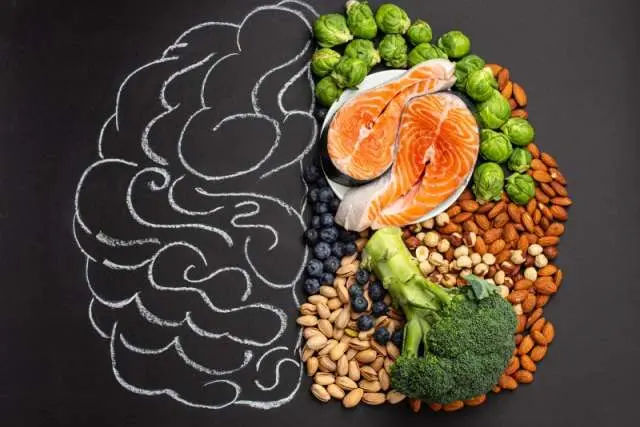
- The prefrontal cortex (decision-making and emotional control)
- The amygdala (fear and stress response)
- The hippocampus (memory and mood stability)
Nutrients act as raw materials and messengers, helping these regions communicate efficiently.
Neurotransmitters: Food as Chemical Building Blocks
What Nutrients Influence Brain Chemistry and Emotions?
Your brain runs on chemistry, not motivation alone.
Key nutrients include:
- Tryptophan → produces serotonin
- Tyrosine → produces dopamine and norepinephrine
- Omega-3 fatty acids → support neuron structure
- B-vitamins → enable neurotransmitter synthesis
- Magnesium → regulates stress response
Without these, your brain struggles to maintain emotional balance.
Why Some Foods Improve Mood and Emotional Well-Being
Certain foods naturally contain these compounds or help your body produce them more efficiently. That’s why:
- Protein stabilizes mood
- Healthy fats reduce emotional volatility
- Complex carbs calm anxiety
Mood isn’t about willpower—it’s about chemical availability.
Blood Sugar: The Emotional Rollercoaster Nobody Talks About
Why Not Eating Affects Mood So Strongly
Ever snapped at someone when hungry? That’s not accidental.
Low blood sugar triggers:
- Cortisol release (stress hormone)
- Adrenaline spikes
- Reduced cognitive control
This creates irritability, anxiety, and even sadness.
Highly processed foods worsen the problem by causing rapid spikes and crashes, leaving you emotionally unstable.
When Foods Have the Strongest Effect on Mood
Timing matters.
Mood effects are strongest when:
- Meals are skipped
- Diets lack protein or fiber
- Sugar intake is excessive
- Caffeine replaces real meals
Balanced meals smooth emotional fluctuations by keeping blood sugar steady.
Inflammation: The Hidden Mood Killer
Why Diet Affects Mental Health So Deeply
Chronic inflammation doesn’t just harm your body—it affects your brain.
Inflammatory chemicals interfere with:
- Neurotransmitter production
- Brain plasticity
- Stress regulation
Studies consistently link high-inflammation diets to higher depression and anxiety rates.
Mood-boosting foods work partly by reducing inflammation, protecting brain cells, and restoring communication pathways.
What Foods Are Known to Boost Mood?
Rather than hype individual “superfoods,” think in patterns.
Categories of Mood-Boosting Foods
- Fermented foods (yogurt, kefir): support gut bacteria
- Fatty fish (sardines, salmon): provide omega-3s
- Whole grains: stabilize blood sugar
- Leafy greens: supply magnesium and folate
- Dark chocolate: boosts dopamine and blood flow
The magic lies in consistency, not occasional indulgence.
Who Benefits Most From Mood-Boosting Foods?
While everyone benefits, the effects are strongest for:
- People under chronic stress
- Individuals with anxiety or mild depression
- Students and professionals under cognitive pressure
- Those recovering from burnout or emotional exhaustion
Food doesn’t replace therapy—but it creates the biological conditions for emotional resilience.
Where Do Mood-Boosting Nutrients Come From Naturally?
Nature already solved this problem.
Traditional diets across cultures—Mediterranean, African, Asian—share common traits:
- Whole foods
- Minimal processing
- High fiber
- Natural fats
- Fermented elements
Modern diets removed these—and mental health declined alongside.
That’s not coincidence.
A Personal Insight: Why “Eating Happy” Is Misunderstood
Here’s my contrarian observation.
Most articles frame mood-boosting foods as emotional shortcuts—“eat this and feel happy.” That’s misleading.
In reality, food doesn’t create happiness. It removes obstacles.
When your gut is inflamed, blood sugar unstable, and nutrients deficient, your brain is fighting uphill. No amount of positive thinking can override biological chaos.
But when nutrition supports brain chemistry, emotional regulation becomes easier, not forced.
Food doesn’t add joy—it restores balance.
Michael Pollan’s 7 Rules for Eating—and Mood
One “People Also Ask” question keeps appearing: What are Michael Pollan’s rules?
Though simple, they align perfectly with mood science:
- Eat real food
- Not too much
- Mostly plants
- Avoid ultra-processed items
- Respect traditional diets
These principles reduce inflammation, support gut health, and stabilize blood sugar—three pillars of emotional well-being.
Do Certain Foods Really Make You Happier?
Yes—but not instantly, and not alone.
Think of mood-boosting foods like regular sleep or exercise. Their power builds over time, strengthening emotional resilience rather than providing momentary highs.
Sustainable happiness is biochemical consistency.
Conclusion: Food as Emotional Infrastructure
So, why do certain foods boost mood?
Because they:
- Support the gut-brain axis
- Enable neurotransmitter production
- Reduce inflammation
- Stabilize blood sugar
Mood isn’t just mental—it’s metabolic.
Once you stop asking, “What food makes me happy?” and start asking, “What food helps my brain function properly for Diet and Emotional Well-being?” everything changes.
That’s the real science behind mood-boosting foods.
FAQs
FAQ 1: Why does food boost your mood?
Food boosts mood because Diet and Emotional Well-being are closely linked—nutrients influence neurotransmitters, gut health, inflammation, and blood sugar regulation.
FAQ 2: Can diet alone treat depression?
No. Diet supports mental health but works best alongside therapy, social support, and lifestyle changes.
FAQ 3: How long does it take for mood-boosting foods to work?
Some effects appear within hours (blood sugar stability), while others take weeks (gut microbiome changes).
FAQ 4: Are supplements better than food for mood?
Whole foods are generally superior because they provide synergistic nutrients and fiber.
FAQ 5: What’s the biggest dietary mistake affecting mood today?
Over-reliance on ultra-processed foods that spike blood sugar and promote inflammation.