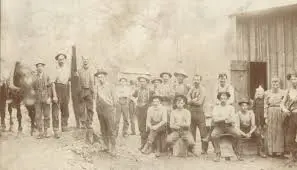
Introduction: What Did My Ancestor Really Do for a Living?
If you’ve ever squinted at a census record wondering whether that smudged word says “miller,” “miner,” or something else entirely, you’re not alone. One of the most searched questions in genealogy is deceptively simple: How do I figure out my ancestor’s occupation from old census records?
Here’s the thing. Deciphering an ancestor’s occupation isn’t just about reading old handwriting. It’s about understanding context, history, language, and human habits. My unique angle is this: instead of treating census occupations as isolated words, we’ll treat them as clues in a larger story. When you combine faded ink with social history, geography, and family patterns, those cryptic job titles begin to speak clearly.
Why Census Occupations Matter More Than You Think

Occupations as windows into daily life
An occupation tells you how your ancestor spent their days, who they interacted with, and where they fit in society. A “laborer” lived a very different life from a “clerk,” even if they lived on the same street.
Census records didn’t just catalog people. They quietly documented economic survival strategies.
What census takers were actually recording
Census enumerators wrote down what they were told, often in a hurry, sometimes interpreting accents or unfamiliar terms. This explains why the same person’s job might change spelling, or even description, across decades.
Understanding Faded Handwriting Before Interpreting Meaning
Old handwriting isn’t bad, it’s just different
Nineteenth and early twentieth-century handwriting followed rules most of us were never taught. Letters like “s,” “f,” and “l” often blur together.
Before guessing the occupation, study how the enumerator formed letters elsewhere on the page. That mystery word usually reveals itself through comparison.
Ink, age, and damage play tricks
Faded census records suffer from ink bleed, paper decay, and scanning loss. Sometimes the issue isn’t your eyes. It’s chemistry and time.
Decoding Commonly Misread Occupations
When words don’t mean what we think
Some census occupations look familiar but mean something else entirely.
For example:
- “Agent” often referred to land or insurance agents, not secretive operatives.
- “Engineer” could mean a train driver, not a modern technical professional.
- “Laborer” was frequently a placeholder for irregular or seasonal work.
Context determines meaning.
Obsolete and regional job titles
Many occupations no longer exist or were region-specific. A “cordwainer” wasn’t a laborer. They were a skilled shoemaker. A “huckster” sold small goods, often door to door.
Understanding historical terminology is essential.
Using Location to Clarify Occupation
Geography narrows the possibilities
Where your ancestor lived can dramatically narrow occupational interpretations. A “miner” in Cornwall likely worked tin. A miner in Pennsylvania probably worked coal.
Urban versus rural settings also matter. A “teamster” in a city hauled goods. In farming areas, they often worked with livestock.
Local industries shape job titles
Census occupations often reflect dominant local industries like textiles, shipping, railroads, or agriculture. Studying regional economic history fills in the gaps.
Why Occupations Change Across Census Years
People adapted to survive
If your ancestor’s occupation changes between censuses, that doesn’t mean the records are wrong. It often reflects economic reality.
Industrialization, war, illness, or migration forced people to switch jobs frequently.
Women’s and children’s work was underreported
Many women’s occupations were listed as “keeping house,” even when they ran businesses or farms. Children’s labor was often ignored or inconsistently recorded.
Absence doesn’t equal inactivity.
Cross-Referencing Beyond the Census
Other records confirm meaning
To truly decipher an occupation, census data should be cross-checked with:
- City directories
- Military records
- Tax lists
- Church or parish records
- Immigration documents
Patterns emerge when records agree.
Family clustering offers clues
If multiple relatives list similar occupations, that’s rarely coincidence. Trades often passed through families.
Reading Between the Lines of Status and Class
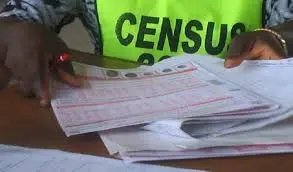
Occupations hint at social standing
Some census records included employment status like “employer,” “employee,” or “own account.” These small notes reveal economic independence or vulnerability.
An ancestor listed as a shopkeeper with employees lived differently from one working day wages.
Seasonal and unstable work mattered
Short job descriptions often mask economic insecurity. A single word might represent a life of constant adjustment.
When the Occupation Still Isn’t Clear
Educated guesses are valid
Genealogy isn’t about perfect certainty. It’s about reasonable conclusions supported by evidence.
When a word remains unclear, document your interpretation and the reasoning behind it. Future discoveries may confirm it.
Sometimes ambiguity is the answer
Not every ancestor fits neatly into modern definitions. Accepting uncertainty is part of honoring real human lives.
Conclusion: From Smudged Ink to Living Story
Deciphering your ancestor’s occupation from a faded census record is less like reading a document and more like solving a quiet historical puzzle. The ink may be faint, but the story is still there.
When you combine handwriting analysis, historical context, geography, and human behavior, those cryptic job titles transform into meaningful narratives. You stop seeing a word and start seeing a person.
And that’s the real reward of genealogy. Not answers alone, but understanding.
FAQs
Why do census occupations differ across years?
Economic changes, migration, seasonal work, and enumerator interpretation often caused variations.
How reliable are census occupations?
They’re generally reliable but should be verified with other historical records.
What if the occupation is illegible?
Compare handwriting on the page, research local industries, and document educated interpretations.
Did census takers standardize job titles?
No. Spellings and descriptions varied widely based on personal judgment.
Can women’s real work be hidden in census records?
Yes. Many women’s economic contributions were simplified or omitted entirely.